The factory

From idea to reliable software, with agentic engineering and human supervision.

The engineering operating system behind MAUCTUS Systems & Advisory' solutions: combining the speed of AI agents with the rigor of a top-tier digital consultancy.

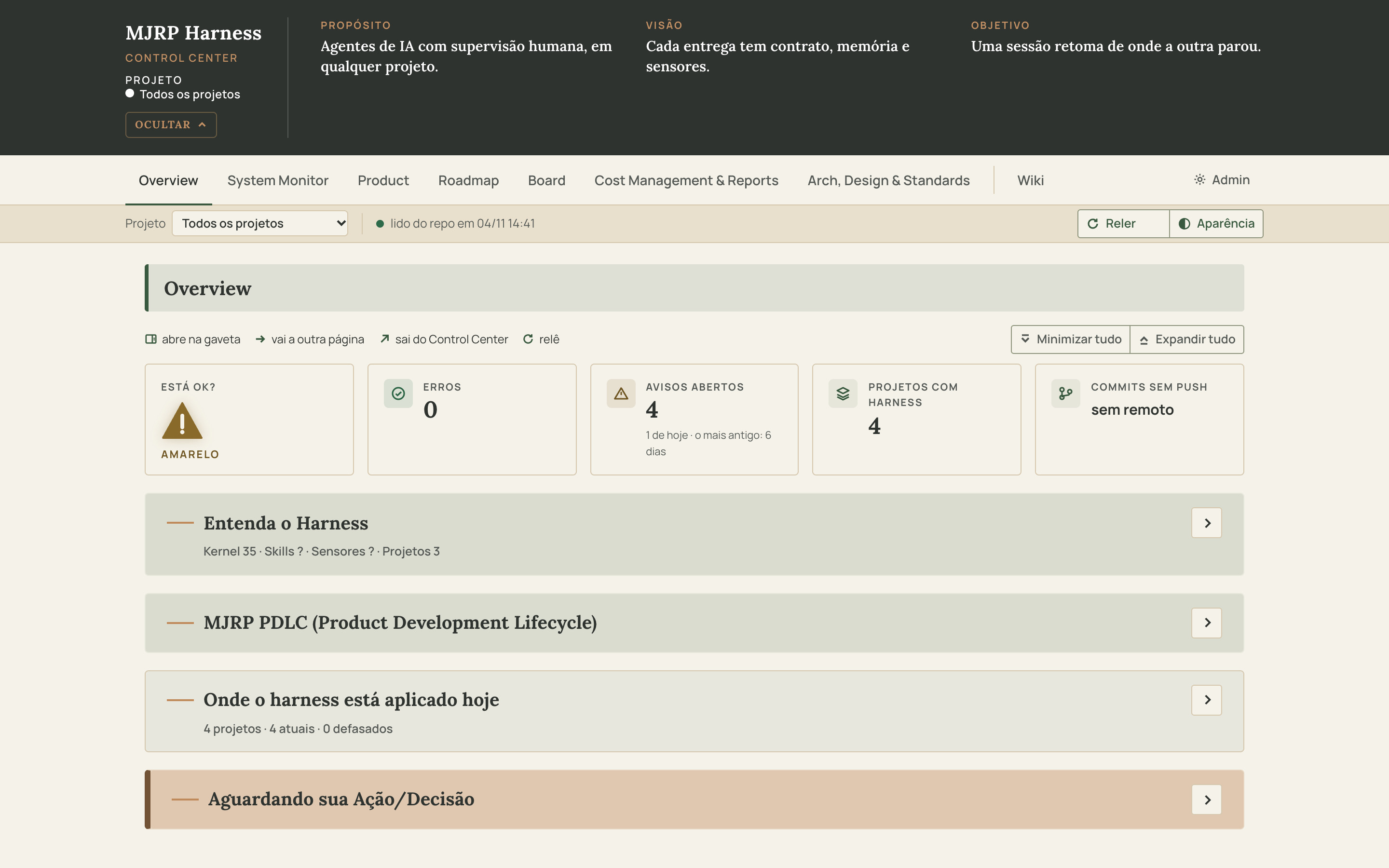
We integrate Context, Loop, and Graph Engineering—along with a Wiki-style living memory and deterministic sensors—to deliver software that is secure, auditable, and governed in real time via the Harness Control Center, a platform designed to observe, track, oversee, and control every project.

Screen with sample data: the Control Center overview
The problem

AI has accelerated code writing, but without engineering and determinism, it delivers fragile prototypes and solutions — without architecture, without memory, without security, and difficult to audit and maintain.

  • Speed without engineering rigorgenerating fast code without discovery, clean architecture, or independent review multiplies technical debt, silent failures, and security risks
  • Amnesia and drift between code and decisionwithout context engineering or a living knowledge graph, each session starts from scratch and the documentation drifts away from what was built
  • Probability without governance or auditrules in prompts are just requests — without contracts, hooks, and deterministic checks, nobody audits what the agents did or what it costs
The solution

You come in with an idea and leave with a ready-to-use, secure, and auditable digital solution: an agentic system where memory resides in a graph-based repository, every stage follows a closed-loop process with an independent judge, and deterministic sensors block any deviations before delivery.

01 · Understand the Harness

From request to reliable software, in four parts.

All work goes through the same four parts of the harness. Follow a sample request: «I want an order portal with approval».

UNDERSTAND THE HARNESSFrom request to reliable software, in four parts.Follow a request: «I want an order portal with approval»The house rulesdesignwrite the copydescribe the statesdeliverThe guide for each stepThe inspectorsThe projects↻ the lesson comes back as a rule for every project«order portal with approval»
35pages of concepts, rules and standards, in 5 themes

The Harness builds up knowledge Learns and Teaches

Before any line of code, the agent reads what the platform's Wiki provides.

Engineering and Design best practices, the way of working in Loops. A unified, living knowledge base that guides every project and evolves with each iteration.

28guides, one for each kind of work

The Harness has specialised skills for each step Guides before the Action

Each stage follows an explicit procedure (skill) that defines what the agent should do —

and what is forbidden to do.

«Whoever designs does not judge, whoever builds does not integrate, each guide has one role only.»

81automatic checks

The Harness evaluates everything Checks after the Action

After execution, inspectors evaluate the delivery and either veto or release...

...the progress using deterministic scripts, not probabilistic guesses. No one reviews their own work: an independent evaluator audits and the human validates the critical milestones.

12projects with a contract

The Harness runs in each project Inherits and gives feedback

Each project receives the manual, the rules, the guides and the inspectors, and gives back what it learned.

A contract defines what the project is and which inspectors apply to it.

02 · The anatomy
MJRP Harnessorchestration: coordinator, judges, integratorContext engineeringTools & GuidesIntake · the idea or the request; picks the laneStandard laneFast laneLoop 1 · DiscoveryExploreFrameLoop 2 · DesignDesignCritiqueSee it✓ Ready to buildLoop 3 · DeliverySpecPlanTasksExecuteLoop 4 · ReleaseUATAcceptedDeploySoftware ready to useSecurity & Sandbox · where the agents runGuardrails & Foundation · contract · VISION · PRINCIPLESGovernance & Observability · the Control Center and the sensorsLoop 5 · Learnkaizen and measures · ↻ back to the harness

Seven elements that, together, make the harness work.

1of 7
HE-1Running

Loops

The heart: everything is organised around it

Every piece of work goes through loops with a beginning, middle and end: understand the request, discover the solution, build it and learn from the result. No loop starts without knowing when it ends.

Next step: loops that run on their own from start to finish

2of 7
HE-2Running and evolving

Orchestration & Evals

Who does what, and who checks

Each step has an owner. Whoever builds is never whoever checks: an independent reviewer reviews the work, and what the person sees or decides only counts with their acceptance; the rest closes through the independent recheck.

Next step: a specialised agent for each role; the evaluations running on their own

3of 7
HE-3Running and evolving

Governance & Observability

Clear rules and everything in view

The system refuses on its own whatever breaks the rules. What the person needs to see, decide, or what concerns security, asks for their approval. A panel shows the state of each project, the alerts and the cost.

Next step: the detailed record of what each agent did

4of 7
HE-4Running

Context Engineering

The right memory at the right time

The system remembers where the work stopped, the decisions made and what was learned. It loads only what the task asks for, and the cost of that is measured.

Next step: measure what each agent actually reads

5of 7
HE-5Running and under construction

Tools & Guides

The procedures and the tools

28 procedure guides, one for each kind of work, and the automatic tools catalogued.

Next step: the tool inventory declared in each project

6of 7
HE-6Running and under construction

Security & Sandbox

The environment and security

Everything is recoverable. No password or secret is kept in a file. Protected access.

Next step: an isolated environment for each agent to work in

7of 7
HE-7Running

Guardrails & Foundation

The rules that always apply

Each project declares its rules, its principles and its way of working, and the system checks everything automatically.

03 · The PDLC (Product Development Lifecycle) in loops

The path of every request, from Intake to working software.

Intakethe idea or the request; picks the lane
Loop 1 · Discovery
ExploreFrame
Loop 2 · Design
DesignCritiqueSee it on screen
✓ Ready to build
Loop 3 · Delivery
SpecPlanTasksExecute
ExecutorJudgeIntegrator
Loop 4 · Release
UATAcceptedDeploy
Software ready to use
Loop 5 · Learnkaizen and measures
Fast lane · Quick Prototype (if requested) and Delivery
Discovery and Design, compressedbriefQuick Prototype · if requested
then, the documents↻ what is learned goes back to the harnessstandard lanefast lane
04

The skills map: 28 from the factory, each with a role in each loop.

The same skill appears in every step where it acts. The role is the shape, never just the colour: ◆ orchestrates, ■ produces, ⚖ judges, ↺ fixes, ✎ records.

Hover over a skill to see the other steps where it acts.

Always

in every session

mjrp-pdlcmjrp-pdlc-onboardingmjrp-recording-decisionsmjrp-saving-contextmjrp-structuring-requests

Intake

triage and the lane

mjrp-pdlcmjrp-structuring-requests

Loop 1 · Discovery

Explore

mjrp-coaching-pmmjrp-designing-ui

Frame

mjrp-coaching-pmmjrp-designing-architecturemjrp-writing-reqsmjrp-accepting-decisionsmjrp-critiquing-architecturemjrp-recording-decisions

Loop 2 · Design

Design · Critique · See it on screen

mjrp-copywritingmjrp-defining-design-systemsmjrp-designing-uimjrp-generating-copy-deckmjrp-critiquing-ux-ui

✓ Ready to build

the gate

mjrp-pdlcmjrp-writing-reqsmjrp-ensuring-sdd

Loop 3 · Delivery (SDD)

Specify · Plan · Break down

mjrp-designing-architecturemjrp-specifying-sdd-artifactsmjrp-accepting-decisionsmjrp-critiquing-architecturemjrp-ensuring-qualitymjrp-ensuring-sddmjrp-recording-decisions

Executor

mjrp-implementing-tasksmjrp-debugging

Judge: one per batch, did not build it

mjrp-assessing-code-qualitymjrp-critiquing-architecturemjrp-ensuring-qualitymjrp-ensuring-sdd

Integrator

mjrp-integrating-branches

Fast lane

brief → Quick Prototype, if requested → Delivery → documents

mjrp-integrating-branchesmjrp-designing-uimjrp-implementing-tasksmjrp-ensuring-sddmjrp-debuggingmjrp-syncing-docsmjrp-structuring-requests

Loop 4 · Release

Acceptance testing and Accepted

mjrp-ensuring-qualitymjrp-syncing-docsthe human · accepts what they see

Loop 5 · Learn

did it work? kaizen

mjrp-pdlcmjrp-assessing-code-qualitymjrp-auditing-docsmjrp-critiquing-architecturemjrp-syncing-docsmjrp-crafting-skillsmjrp-recording-decisions

Foundation

the loops' environment

mjrp-configuring-boardsmjrp-pdlc-bootstrap

Maintenance

on demand, outside the steps

mjrp-copywritingmjrp-generating-copy-deckmjrp-crafting-skillsmjrp-inventorying-folders
05

68 artifacts, each with an owner and a place.

Memory lives versioned in files inside the repository itself: any session resumes exactly where the previous one stopped, with no platform lock-in and with a complete history.

Foundation
8
Foundation
Intake
4
Intake
Loop 1 · Discovery
6
Explore
11
Frame
Loop 2 · Design
6
Design
Loop 3 · Delivery
18
Delivery
Loop 4 · Release
2
Release
Loop 5 · Learn
6
Learn
Memory
7
Memory
06 · The result

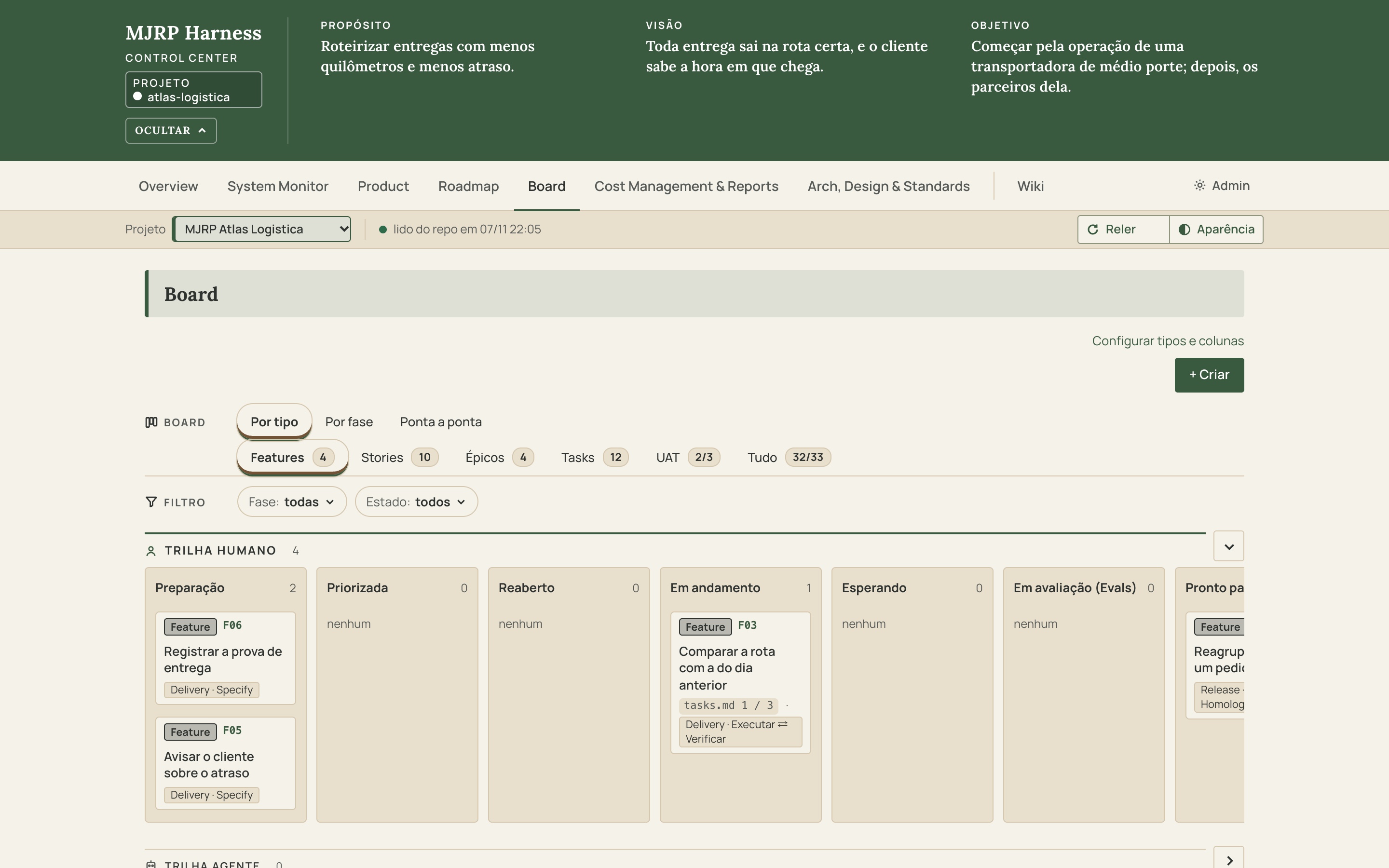
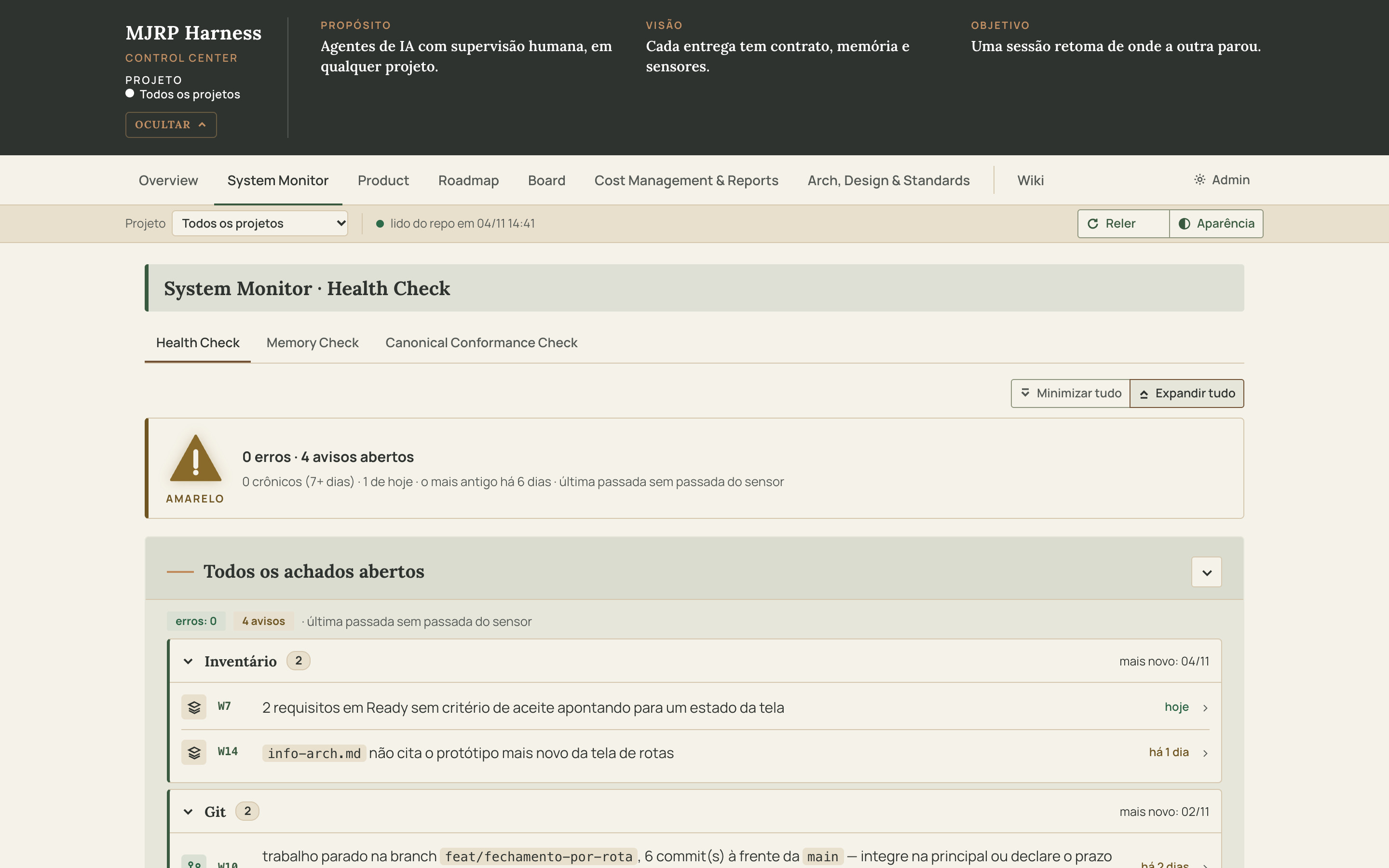
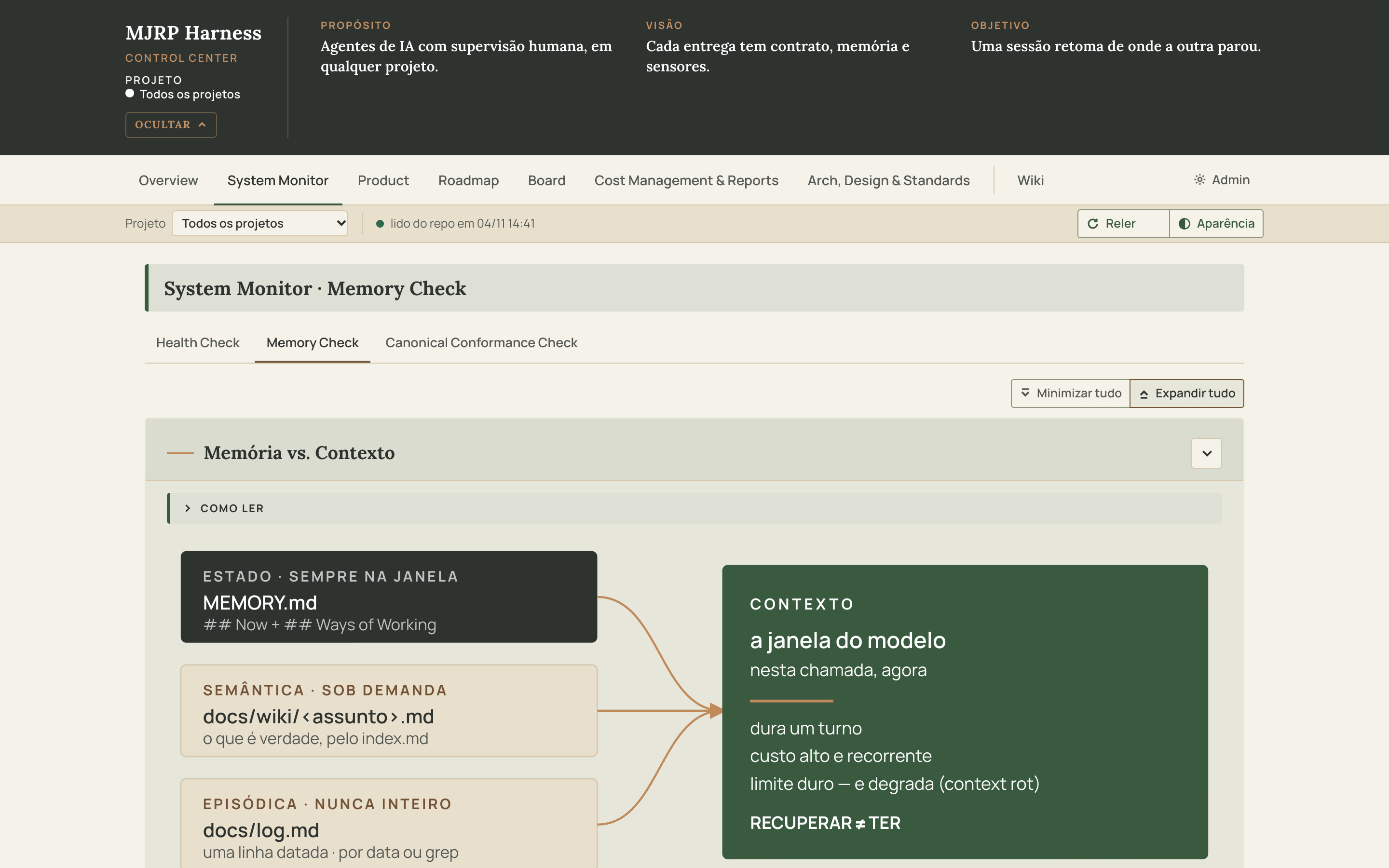
Real-time governance and observability: track every stage, metric, cost, and sensor in the Control Center.

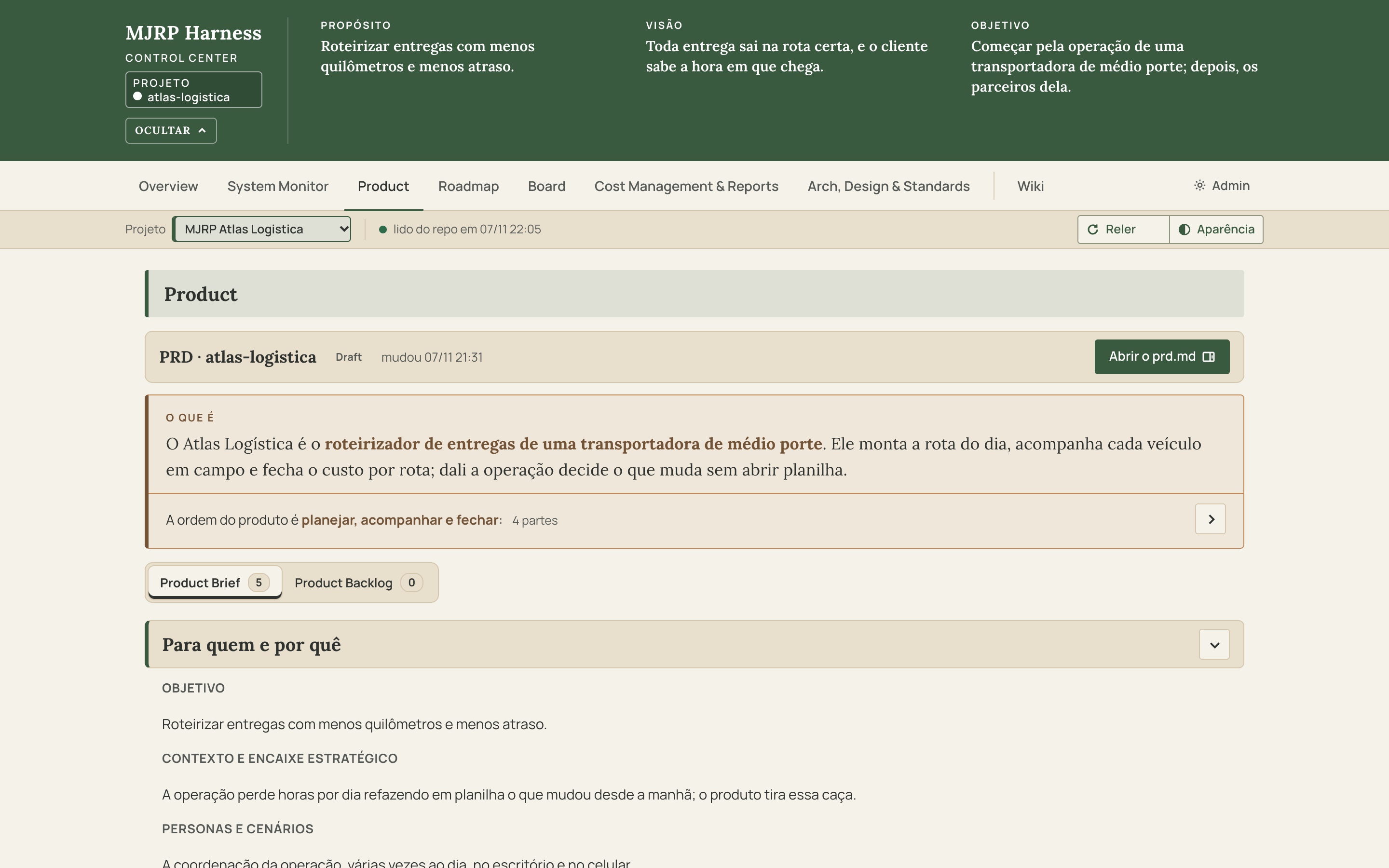
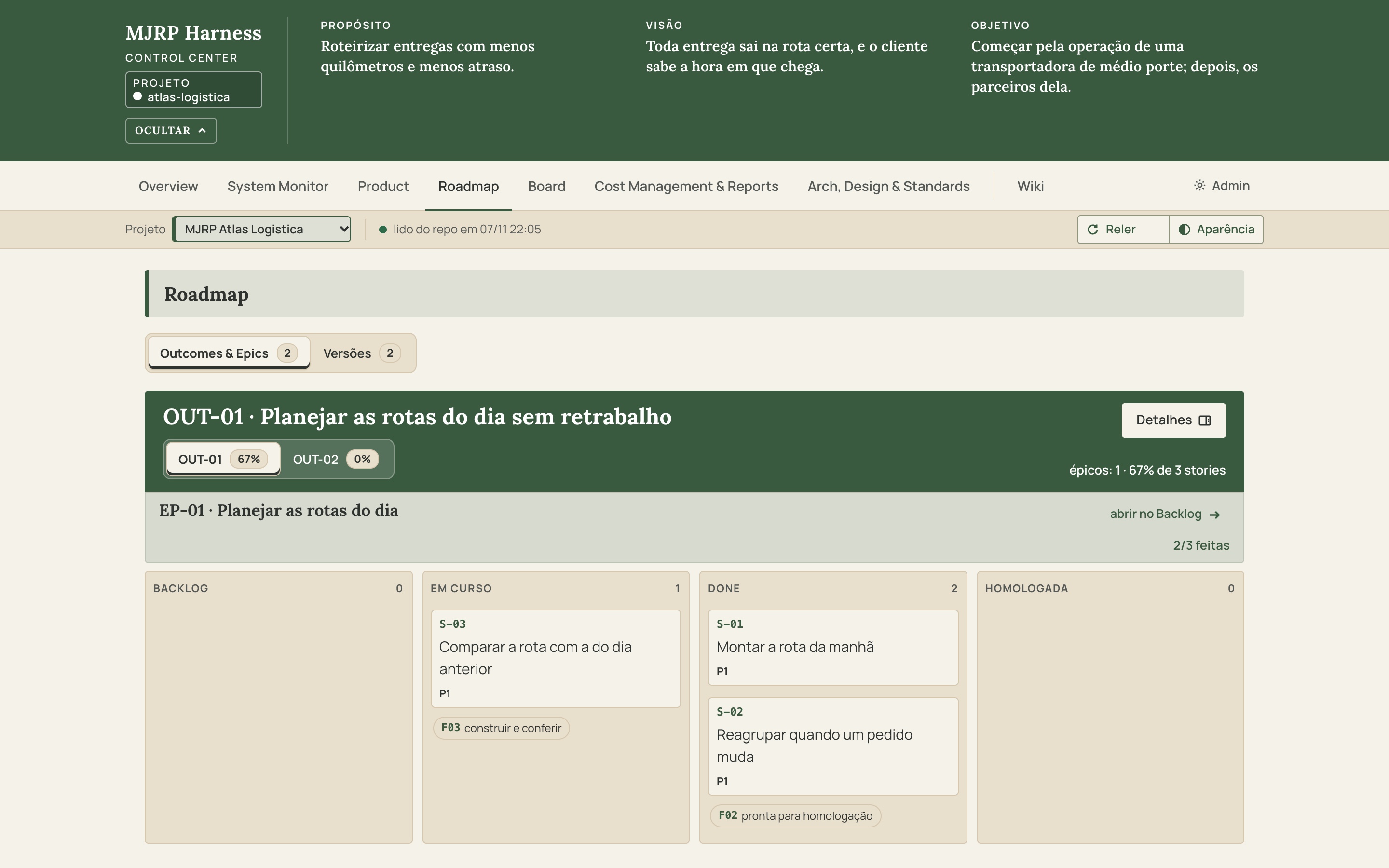
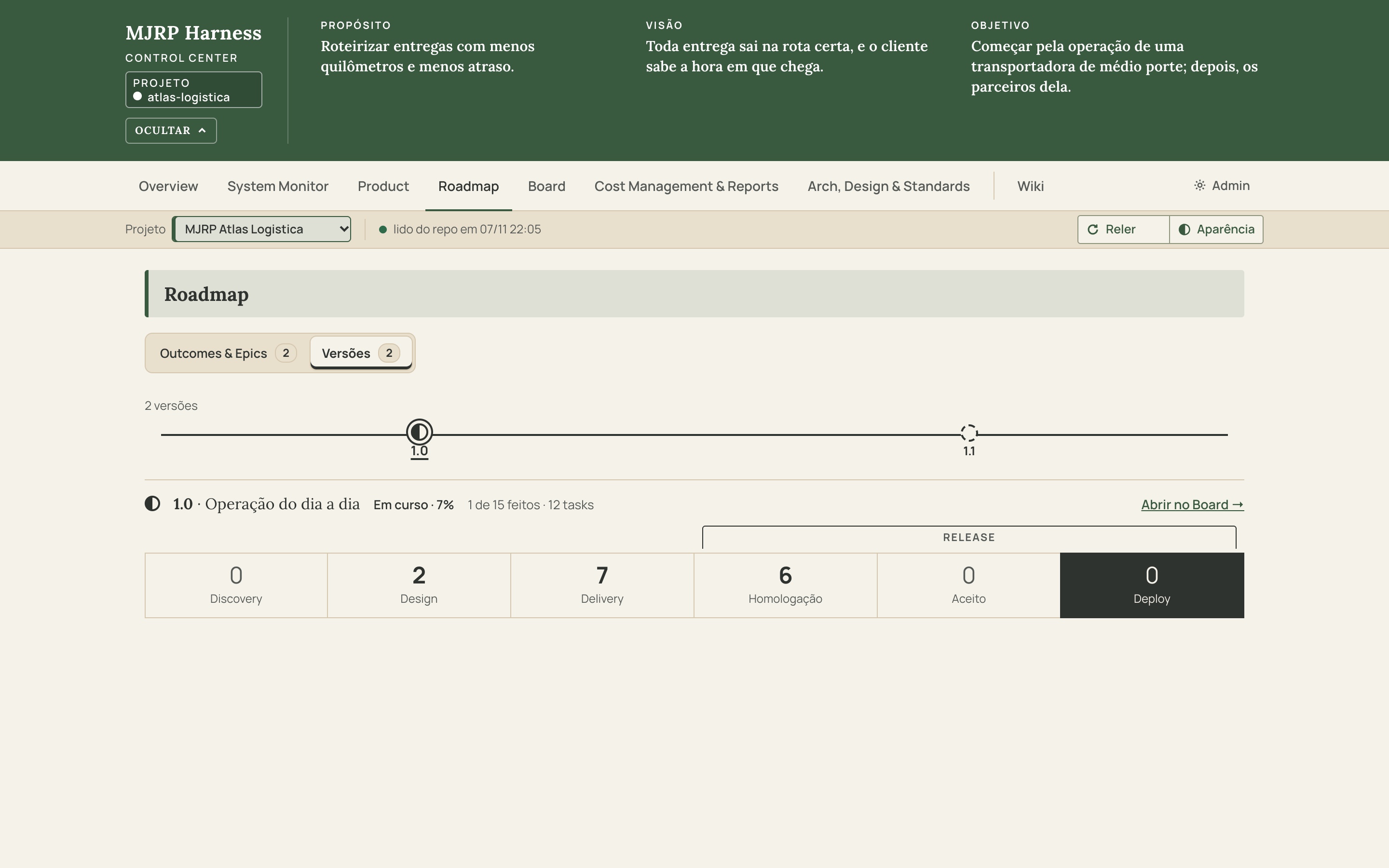
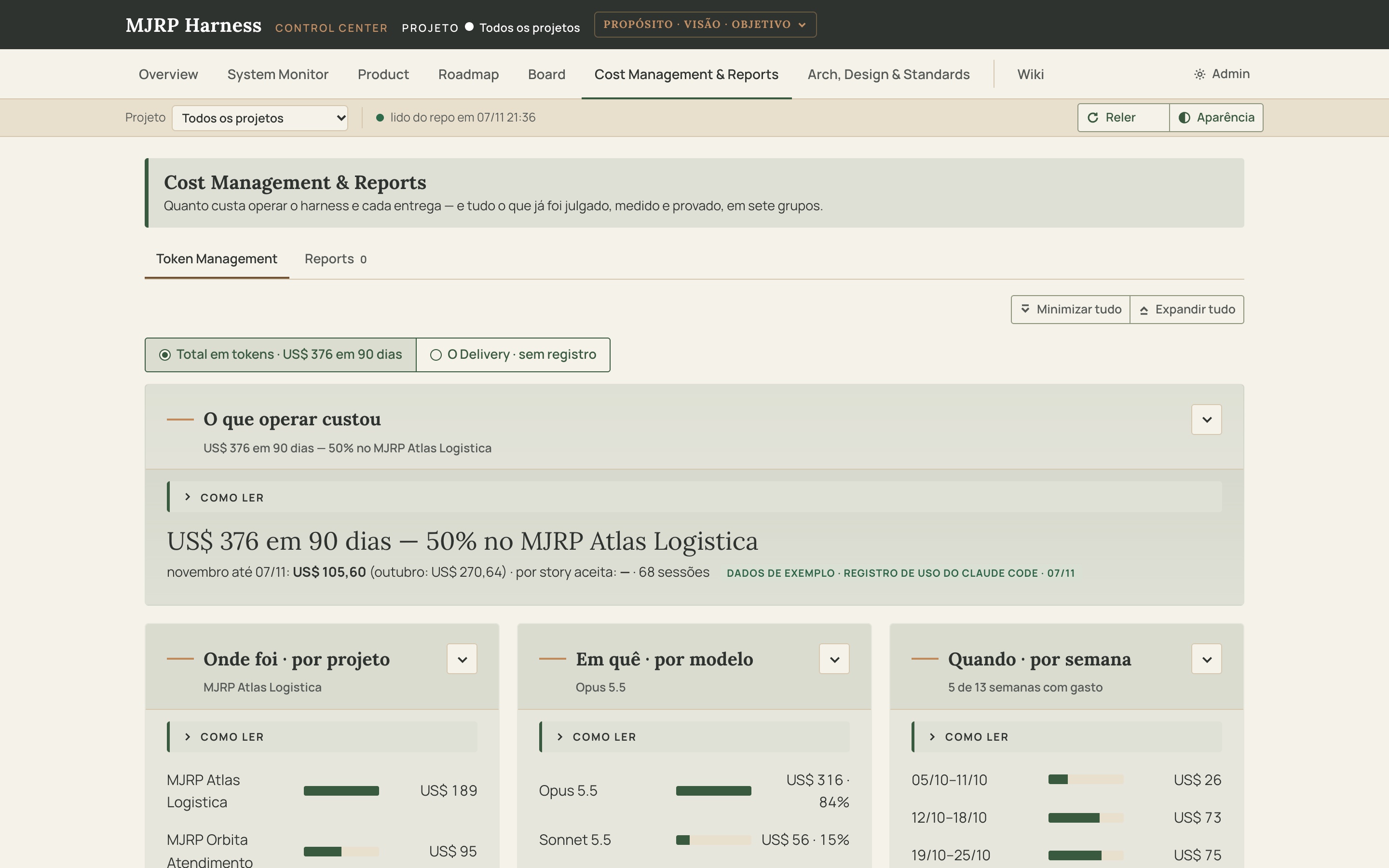
And everything in view in the Control Center, one screen for each part of the menu.

Screen with sample data: Overview
Screen with sample data: System Monitor · Health Check
Screen with sample data: System Monitor · Memory Check
Screen with sample data: Product · the PRD open
Screen with sample data: Roadmap · Outcomes & Epics
Screen with sample data: Roadmap · Versions
Screen with sample data: Board
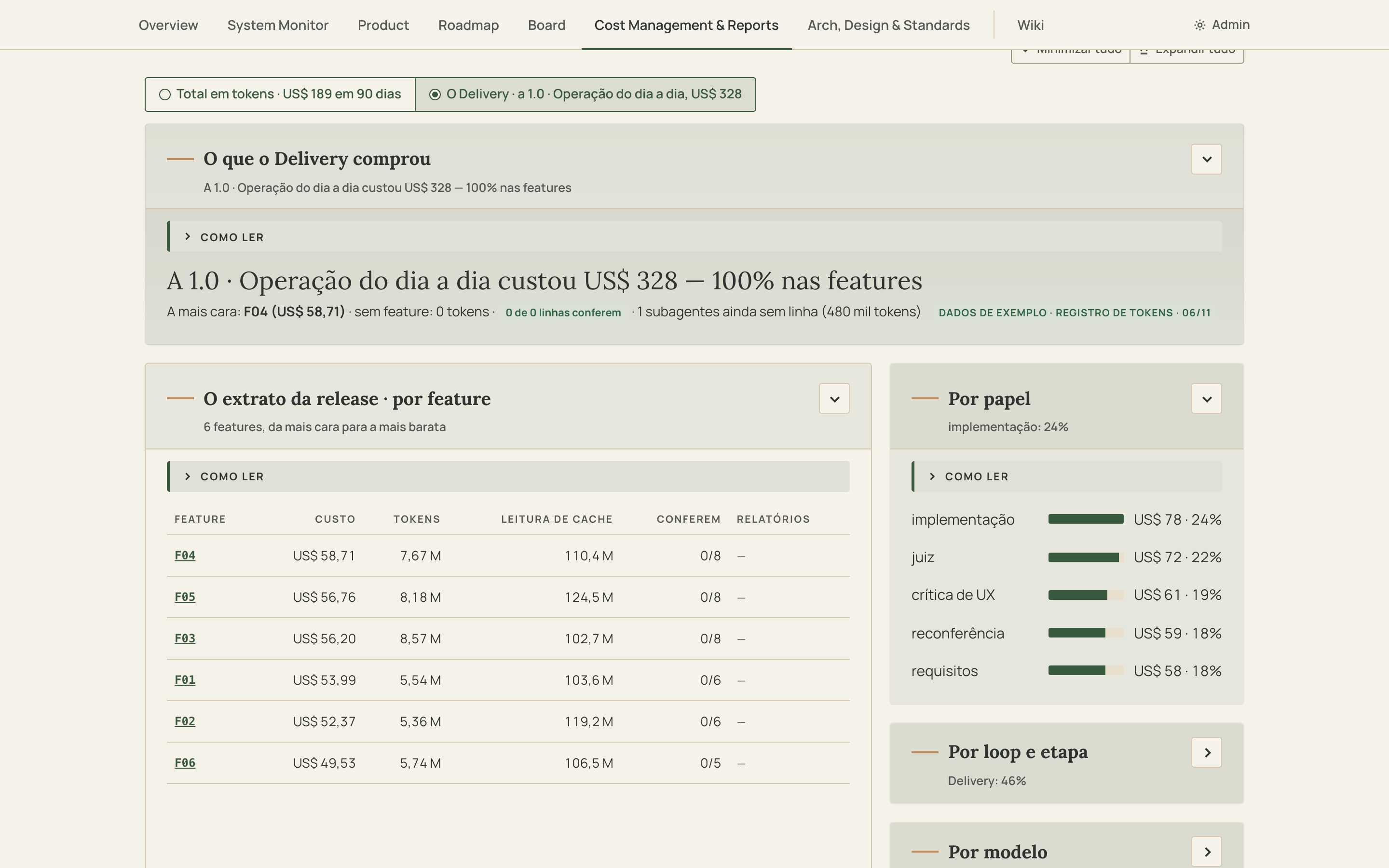
Screen with sample data: Cost Management · Total in tokens
Screen with sample data: Cost Management · The Delivery
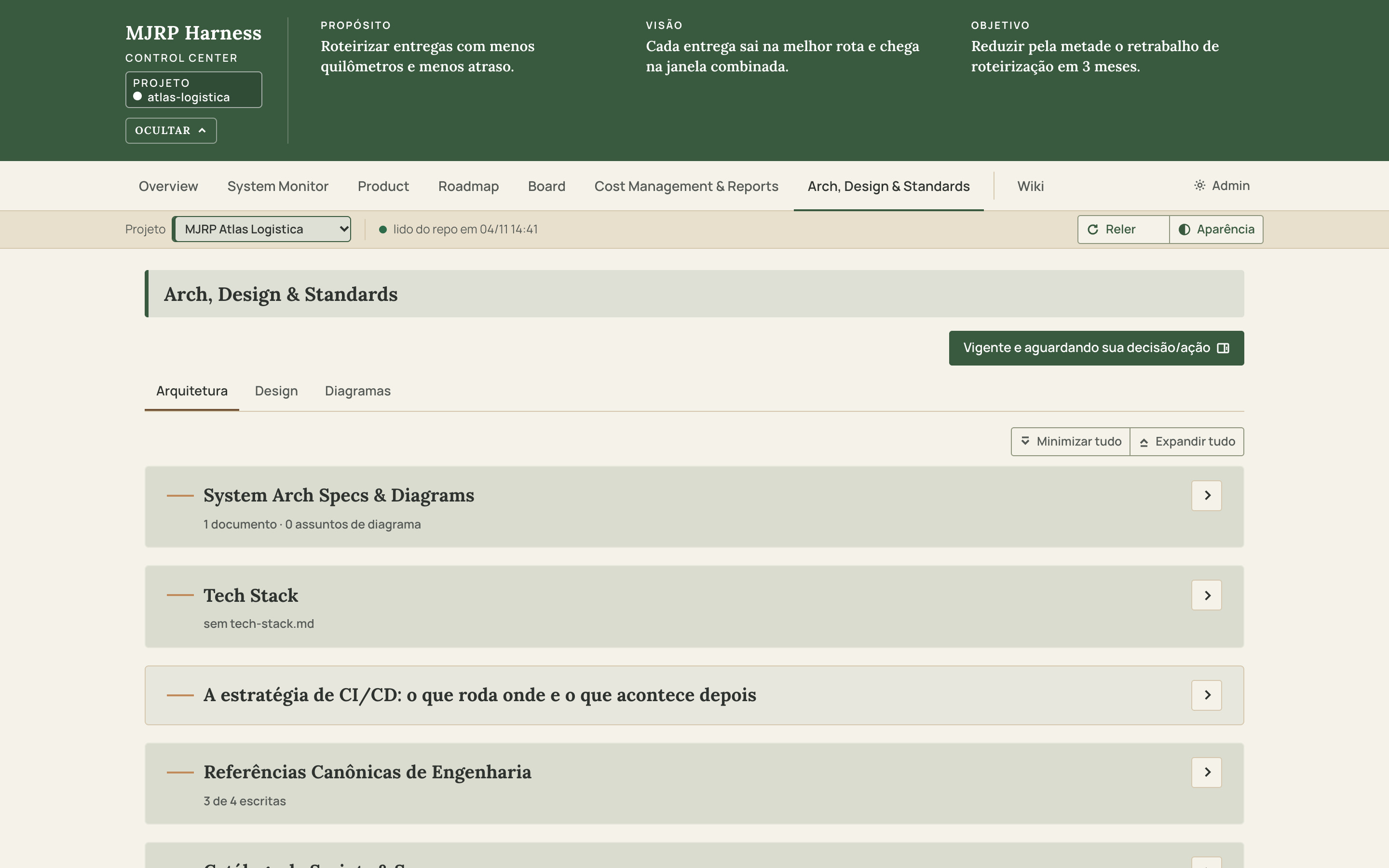
Screen with sample data: Arch, Design & Standards
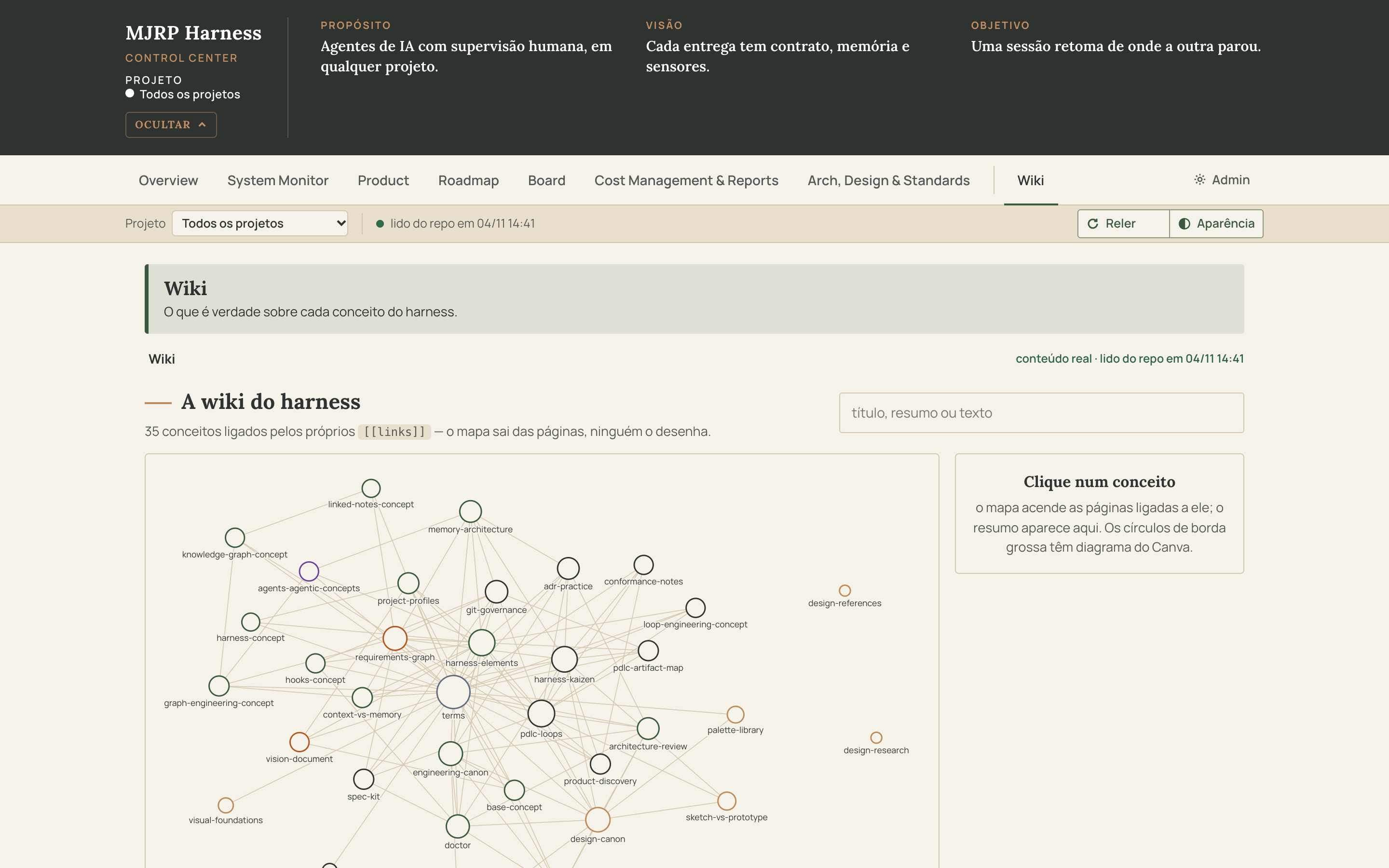
Screen with sample data: Wikithe Wiki
WikiThe knowledge the harness builds up, linked as a graph: every concept, every rule, every standard.

Click a screen to see it large.

Talk to me

Do you want to build reliable solutions or bring agentic engineering to your company?

Tell me about the challenge you want to solve. Let's talk about how to build your solution or structure the method within your operation.